
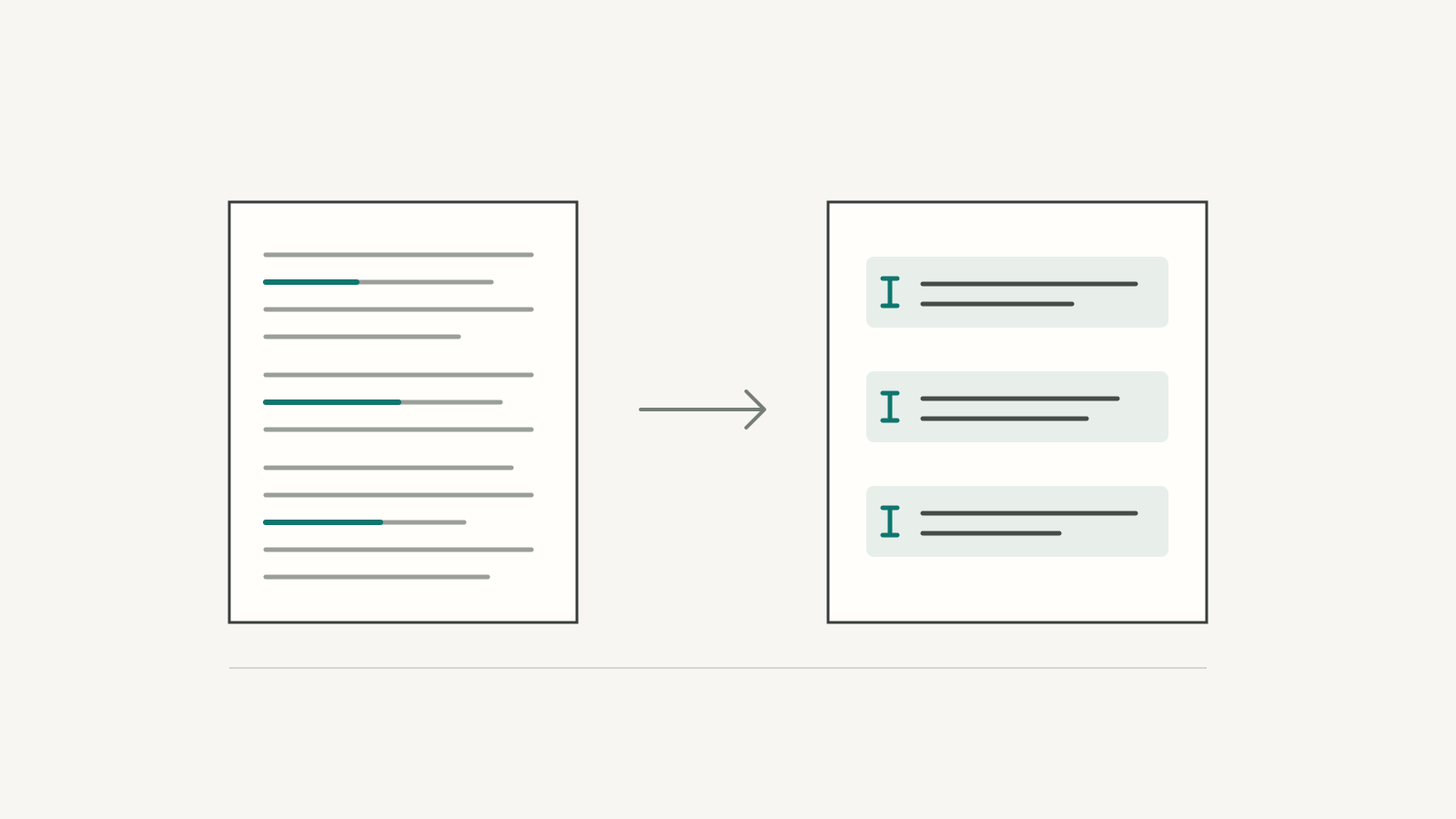
When AI serves as a system to prompt the author of lyrics, how can it avoid making the prompt words longer and more repetitive without sacrificing necessary constraints?
1. Give a conclusion first.
The official consensus is not that “shorter is better”, but rather:The system prompts should be complete, clear, and executable, but do not fill up the context with empty words, tautology, and over-specification.
OpenAI is the official meta-prompt used to allow the model to "generate system prompts" and requires writing detailed system prompt, while clearly requesting Clarity and Conciseness, and writes Avoid unnecessary instructions or bland statements。[1]
Google also makes two compatible points: Gemini follows terse instructions closely, so avoid verbose prompts; but even simplified prompts may require additional detail (and can get long) for optimal performance。[5]
Therefore:
- The goal is to reduceNo information incrementThe text is not about compressing the final chat answer, nor is it pursuing a fixed number of words.
- Permissions, security, exception conditions, output contracts, and fallback routes when information is insufficient are testable constraints that should be retained; do not delete them all when streamlining. [3][4][6]
- Controlled "key constraint reminders" are officially recognized as useful; this is not the same thing as writing the same rule in four ways. See Section 5.
- This roundNoFind the common research conclusion that "there is a fixed optimal number of words for system prompts" or "the longer it is, the worse it will be." The maximum number of lines/tokens that appear in this article are all marked as product engineering budgets.
2. Primary sources of actual reading
After this round of search, I actually read the following official documents or full text of papers/relevant chapters (all accessible on 2026-11-16, main link HTTP 200). Claims can be traced back to these sources; unread material with only a search summary is not considered primary evidence.
| # | Source | Why is it highly relevant? | Spot check |
|---|---|---|---|
| [1]↩ | OpenAI Prompt generation | The official disclosed the meta-prompt used by Playground to "generate or improve system prompts based on task descriptions", which is the most direct first-hand material for this issue. | Have read the full text of the Text meta-prompt given on this page; see Section 3.1 for key sentences |
| [2]↩ | OpenAI Prompting | System messages are placed in stable rules, and task details are placed in user messages; the prompt words are used as code for regression. | Read full page |
| [3]↩ | Anthropic Prompting best practices with Prompting Claude Opus 5 | Clear, direct, and one sentence is enough for the role; long system prompts should be short at the end; new models should avoid excessive prompts/excessive verification. | Have read "Be clear and direct / Give Claude a role / Overthinking" and related sections of the full text of Opus 5 |
| [4]↩ | Google Cloud: Overview of prompting strategies | Recap is officially listed as a component and has a health check list of "redundant/irrelevant/conflicting instructions" | Have read the component table, template, Best practices, Prompt health checklist |
| [5]↩ | Vertex AI Gemini: Prompting strategies (official booklet PDF) | "Short preamble" "Long and repetitive preamble is harmful", while acknowledging that after simplification, it may still be necessary to write a long preamble. | Downloaded locally and read with pdftotext Tip #3, #5, #7, #15 |
| [6]↩ | Microsoft Foundry: System message design for Azure OpenAI | System message list: responsibilities, boundaries, output contracts, uncertainty strategies; clearly lists "too long" as a trap | Read full page |
| [7]↩ | Anthropic Agent Skills research post、Skills Overview、Skill authoring best practices | The official solution for on-demand loading; and "Simplicity is the key, don't explain the knowledge that the model already knows" | Have read the full text of the research post, as well as the three-level loading table in the overview and Concise is key / Token budgets in the writing guide |
Boundary comparison (not the method itself of "How to write system prompts"):
- [8]↩ LLMLingua(Microsoft Research, EMNLP 2023): Token-level compression of already long prompts serves the cost of reasoning, rather than teaching the model to "write cleaner".
- [9]↩ Measuring and Controlling Instruction (In)Stability in Language Model Dialogs(Li et al., 2024): The effectiveness of system prompts will drift during multiple rounds of dialogue; "repeating system prompts before each round of user dialogue" is one of the baselines they compared.
- [10]↩ Prompt Repetition Improves Non-Reasoning LLMs(Leviathan et al., Google Research, 2025):Repeat the entire input query, improves accuracy when inference is turned off. The mechanism is causal attention, not writing the system rules more verbosely.
Not included in the main evidence: third-party blogs (such as unofficial sites that wrote "Thirty rules are not as good as five" as an experience post).https://ai.google.dev/gemini-api/docs/prompting-strategies This round of WebFetch timeout will be based on the Google Cloud official policy page and Vertex booklet, and the unread Gemini API page details will not be quoted.
3. What does the official guide say?
3.1 OpenAI: Avoid empty words when generating system prompts, but retain necessary details
The official playground generator uses meta-prompt, which starts with:Given a task description or existing prompt, produce a detailed system prompt... The same instruction also requires: [1]
- Clarity and Conciseness: Use clear, specific language. Avoid unnecessary instructions or bland statements.
- Minimal Changes: When there are already complex prompts, give priority to enhancing clarity and filling in gaps, rather than tearing down and rewriting its structure.
- Preserve User Content: Guidelines, examples, and variables provided by users should be retained as much as possible.
- Structural suggestion: The first line isA concise, untitled mission statement, then add details, steps, output formats, 1–3 examples as needed, and finally use the optional
# NotesPlace boundary cases and "an area to call or repeat out specific important considerations」。
In other words, when OpenAI himself “let AI write system prompts”, what he objected to wasUnnecessary instructions and empty clichés, there is no objection to writing the tasks, constraints, formats and key points of attention in full; it is even allowed to be written in Notesreiterate in a targeted mannerImportant considerations.
The Prompting Guidelines of the same set of documents also recommend: Put the overall tone and role into system messages, and put task details and examples into user messages; treat prompt words as application code management,Run prompt word tests and evaluation cases for every release。[2]
3.2 Anthropic: Make it clear, but don’t continue to pile instructions for old model habits
Be clear and direct: Write the output format and constraints in detail; use a list for the steps. The "golden test" they gave is: show the prompt word to a colleague who barely understands the task. If the person is confused, the model will most likely be confused too. [3]
"Even one sentence" of character setting is effective, for example You are a helpful coding assistant specializing in Python. There is no need to write a paragraph introducing yourself first. [3]
New model phenomena directly related to "removal of redundancy":
- Needed tools/skills CRITICAL: You MUST... Old prompts that can only be triggered on newer Opus may becomeover triggering; The official recommendation is to change to a normal tone, such as Use this tool when...。[3]
- If in doubt, use [tool] This type of excessive prompting can lead to overtriggering and should be deleted. [3]
- The Claude Opus 5 will verify its operation on its own. If the system prompt also says "Non-trivial tasks must undergo final verification / use sub-agent to review / check again before answering", it willCauses excessive verification, wastes tokens and does not improve quality, should be deleted. [3]
- inlong system prompt wordWhen controlling the length of the text, the official recommendation is to write a concise constraint in the text and add it in the prompt wordPut another short reminder near the end, for example, put Keep outputs reasonably concise. placed at the end
<tone_preference>in. [3]
This once again shows that the official objection is to instructions that are outdated, repetitive, and superimposed on the existing behavior of the model, rather than against "key constraints appearing twice."
Also:Prefer general instructions over prescriptive steps Appears in "thinking/reasoning" situations - "think thoroughly" is often better than handwritten step-by-step plans. [3] This supports "don't over-specify the process", but cannot be extrapolated to "change all security rules into a one-line principle".
3.3 Google: Delete non-incremental repetitions, but the key constraints can be reiterated at the end of the article
The official policy of Google Cloud splits the prompt words into goals, instructions, system instructions, characters, constraints, context, examples, formats,Recap, safety guardrails and other components. The definition of Recap is:Concise repeat of the key points of the prompt, especially the constraints and response format, at the end of the prompt. It’s also in the official template <RECAP> Re-emphasize the key aspects...。[4]
The health check on the same page clearly names three categories of issues that should be cleaned up: [4]
- Redundant instructions and examples: The same instruction or concept is written multiple times in slightly different ways without adding information or nuance.
- Irrelevant instructions and examples: Content that can still complete the core mission after being removed may be irrelevant.
- Conflicting instructions and examples: Logical contradiction between instructions, or between instructions and examples.
- Overt manipulation: Emotional pressure, flattery, and words such as "If you don't do it right, something bad will happen" will "no longer improve the contemporary basic model, but in many cases make it worse."
- Too many tasks: Let the model do multiple cognitive tasks that are different from each other at the same time and should be separated.
Vertex AI's Gemini prompting booklet says in more straightforward engineering language: [5]
- Gemini follows terse instructions closely, so avoid verbose prompts.
- Occasionally, even simplified prompts may require additional detail (and can get long) for optimal performance.
- Tip #5:Long verbose preamble with repeated and too many instructions do more harm than good. For best performance ensure you have terse, clear and specific instructions.
- The Before/After example is the result of "character self-praise + gradual repetition + writing the post-processing checklist again": a task sentence, a few steps, output key names and hard constraints are written all at once, instead of deleting the task itself.
- Tip #7: Instead of stacking DO NOT..., it is better to write what should be done first, and give the default output (catch-all) "when it cannot be completed".
- Tip #15: In the case of long documents, put instructions and formatting requirements in the materialafterUsually better.
3.4 Microsoft: System messages must be unambiguous and conflict-free, and must indicate a retreat; too long messages will crowd out user content.
Azure OpenAI's system message design guide recommends that system messages be used for: role and boundary, tone, output format, scenario-related security and quality constraints. Valid conditions are: unambiguous instructions, avoidance of conflict rules, and clearly written "What to do when information is insufficient/out of scope". [6]
Design checklist: Write responsibilities and typical results first → Define boundaries → Make the output format clear and keep it stable → Make up for uncertainty strategies → Test iterations with real and adversarial use cases. System messages "will affect the model, but compliance is not guaranteed" and need to be filtered and evaluated. [6]
Common pitfalls include: [6]
- Conflicting instructions, such as requiring both brief and comprehensive, without priority.
- Overly long system messages: longer messages can consume context window and reduce room for user content.
- Hidden requirement: If the format is important, it must be written explicitly.
This also supports "too long has engineering costs", but the document does not give a threshold for "it will get worse if it exceeds N words".
3.5 Anthropic Skills: can be loaded on demand, do not insert system prompts in advance
The core design of Agent Skills is progressive disclosure: when starting, only the name and description Enter the system prompt word; read it after matching the task. SKILL.md; Finer reference files and scripts are only opened or executed when needed. [7]
The official loading cost is the engineering level within the product, not the universal optimal word count: [7]
- Level 1 metadata: loaded at startup, approx. 100 tokens/skill。
- Level 2
SKILL.mdText: Loaded after triggering, the document says under 5k tokens。 - Level 3+ resources: Load only when needed.
- There is another guideline for writing:Keep the
SKILL.mdbody under 500 lines for optimal performance;If exceeded, the file will be split.
The writing principle also applies to "Don't write system prompts into textbooks": [7]
- The context window is a public good.
- Default assumption: Claude is already very smart. Only add context Claude doesn’t already have.
- Three application questions: Does the model really need this explanation? Can it be assumed that it already knows? Is this text worthy of the token it occupies?
- The official counterexample is to first explain "What is PDF, what libraries are there, and how to install it with pip", and the positive example is given directly
pdfplumberUsage. - Set appropriate degrees of freedom: Low degree of freedom when tasks are fragile and must be executed sequentially (hard-coded commands); when multiple paths are established, only give principles and do not write a unique script.
The direct inspiration for "AI writing system prompts" is:A manual that is only used in certain scenariosTake out the resident system prompts and change it to load after triggering; the system prompts only retain the index of identity, permission boundaries, global security exceptions, and "when to read which details".
4. The five types of “redundancy” should be dealt with separately
The following classifications are for this surveyComprehensive arrangement, used to align official statements to actionable actions; it is not the original classification of a certain paper.
Remove duplicates:
The same rule appears repeatedly in different words, without adding scope or exceptions. This corresponds to Google’s redundancy check and Vertex’s warning against long preambles and repeated instructions.[4][5]
Action: combine them into one complete rule. If reinforcement is needed, add one concise recap at the end instead of repeating the rule twice in the middle.[3][4]
Get rid of empty words:
Polite filler, self-praise, emotional pressure, bland or manipulative language such as “you are a top expert, so please take this seriously,” and explanations of knowledge the model already has.[1][4][7]
Action: delete them. They consume context and may reduce the performance of current models.[4]
Avoid over-specification:
Writing every possible path as a step-by-step script, or adding old-model instructions such as “must,” “check again,” or “call a tool when unsure” on top of behavior newer models already exhibit, can expand scope and cause excessive checking or tool use.[3][7]
Action: keep procedural instructions at the level of principles; prescribe exact steps only when they are fragile or must be consistent.
Load on demand:
Packing occasional procedures, long examples, and domain manuals into the system prompt.
Action: keep stable rules and an index in the system layer; put scenario-specific details in user messages, tool descriptions, or on-demand files such as Skills.[2][7]
Keep testable constraints:
Role boundaries, prohibited actions, authorization exceptions, output contracts, clarification or refusal when information is insufficient, and safety guardrails. Microsoft’s checklist and Google’s constraints, safeguards, and uncertainty paths all treat these as legitimate system-message content.[4][6]
Simplification does not mean deleting exceptions. One paragraph "You are not allowed to approve refunds beyond your authority; if you encounter such requests, transfer to manual" is shorter and more testable than three paragraphs "Please be sure to abide by company policies, be serious and responsible, and don't make mistakes."
5. Is repetition useful? Be honest and clearly state the applicable conditions.
Yes, but the applicable scenarios are narrow and the system prompts cannot be written as a review draft based on this.
At the official writing level, what is recognized is "a concise restatement of key points", not a tautology:
- Google writes Recap as an optional component, emphasizingend, objects are constraints and output formats. [4]
- Anthropic For tone control of long system prompts, it is recommended tonear the endJust another short reminder. [3]
- The system prompt word generation template of OpenAI allows
# Notesinside repeat out specific important considerations。[1]
At the research level, what is repeated is "the position and re-exposure of prompts", not "rewriting the rules into longer synonymous paragraphs":
Li et al. (2024) observed on LLaMA2-chat-70B and GPT-3.5: the behavior specified by the system prompt will take approximately Eight rounds of dialogueSignificant instruction drift appears within the system, and coexists with the attenuation of attentional system prompts. They regard "injecting system prompts (invisible to the user) again with a certain probability before each round of user utterances" as one of the strong baselines; this method can improve stability, but there is a trade-off with performance. The split-softmax proposed in the paper is often better on the stability-performance curve. [9]
Applicable conditions: In multiple rounds of dialogue, system rules are "diluted" by subsequent rounds. This isplace again during runtime, does not authorize the author to copy the same paragraph three times in the text of the system prompt word. The experimental models are relatively old (including GPT-3.5, LLaMA2) and cannot be directly regarded as quantitative conclusions for all flagship models in 2026.
Leviathan et al. (2025) found: inNot using reasoning When changing the input query to "query + writing the same query again", in 70 tests on multiple benchmarks of Gemini / GPT / Claude / DeepSeek, 47 times were significantly better and 0 times were significantly worse; when reasoning is turned on, the effect is close to neutral and slightly positive. The author explains that the causal language model cannot allow the front token to see the back token. After repetition, each cue token can notice other cue tokens. This operation does not increase the generated length, but does increase the input token. [10]
Applicable conditions: This is the reasoningEntire queryThe repetition is used to complete the two-way information;NoThe system prompt word writing skills do not prove that writing "Please obey the rules" twice will improve compliance.
Therefore, it is inappropriate to draw two wrong conclusions:"Repetition is always harmful" or "The longer you write and the more you repeat, the more stable it will be." A more stable engineering practice is: each rule in the text appears only once and is written completely; if the evaluation shows that key constraints in long contexts or long dialogues are ignored, thenAdd a short Recap at the end, or consider runtime replay in multi-round arrangements rather than synonymously stacking them in the middle of the manuscript.
6. Boundaries of Prompt compression
LLMLingua deals with already long prompts (thinking chains, context learning, retrieval documents, etc.), using a small model to perform coarse-to-fine token-level compression based on the amount of information. The paper reports a maximum compression of about 20 times on GSM8K, BBH, ShareGPT, and Arxiv-March23 with a small performance loss. [8]
itNoSolution to this problem:
- The compression goal is the cost of inference, not having a human (or another AI) write maintainable system prompts.
- The compressed results are often not suitable as system prompt etymology manuscripts that will be continued to be edited, reviewed, and returned.
- If security exceptions and permission boundaries are regarded by the algorithm as "deletable low perplexity connectives", the risk is opposite to "writing verbosity", but equally serious.
What needs to be saved is the empty words in the resident system prompts and the external manual; instead of writing a huge manuscript and then handing it to the compressor.
7. Practical methods (comprehensive suggestions, not original words from a single source)
The following steps are to synthesize sections 3-6 into an executable process for use when "letting AI write or compress system prompts".
First define what should be placed in the system layer.
Roles, global boundaries, security and permission exceptions, output contracts, fallback when information is insufficient. Put task examples, incidental processes, and tool details into user messages, tool descriptions, or in-demand skills. [2][6][7]
Delete words according to the information increment and not according to the length target.
Delete empty words, synonymous sentences, the background of the model that has been learned, and the outdated "must recheck/call if not sure" overlay. Exceptions and formatting are preserved. [1][3][4][5]
Write a rule only once and in its entirety.
Put scope and exceptions in the same clause to avoid them looking like different rules. If the evaluation shows that it will be washed away by the long context, just add a sentence of Recap at the end of the article. [1][3][4]
Write down what you should do first and the default fallback route, and avoid piles of purely forbidden lists.
Prohibited items still need to be retained, especially permissions and security; but using "what to do + how to stop when you can't do it" will be clearer than a string of isolated DO NOT. [5][6]
Matching degrees of freedom.
Fragile actions such as security, authorization, funds, deletion, and external sending are hard-coded; the style and conventional problem-solving paths are just given in principle. [7]
Acceptance based on regression rather than word count.
See Section 9. After passing the test, consider whether you can continue to delete it; if the deletion fails, add the article back. [2][4][6][7]
8. Streamline the Chinese examples before and after (illustrative examples, do not quote the original text of a certain company)
This is an example written to illustrate Section 4 classification and is not taken from an official document.
Before streamlining (empty talk + tautology + over-specification + key exceptions diluted):
You are a very professional, friendly, patient and helpful e-commerce after-sales expert with rich customer service experience. Please always remain polite, serious, and responsible, and do your best to give users the most comprehensive and accurate help. You must ensure that all answers are true and reliable and must not be fabricated, hallucinated, or provide inaccurate information. You want to be as concise as possible, but also cover every detail so that your users are completely satisfied.

When a user asks about logistics, returns or refunds, please first express your understanding, then explain the process in detail, then confirm the user's sentiment, then give the next step, and check again if necessary to see if you have answered completely. If you are not sure, try to give possible answers because you are the expert. Be sure to follow all company policies, laws and regulations and don't make mistakes.

Remember: be sure not to make up order status. Please note again that you must be honest and cannot make up shipping or payment information. You are a professional customer service, so you must answer comprehensively.
Problem: The character and "Don't make it up" are said multiple times each; "brevity" conflicts with "detailedness" and has no priority; there is no measurable exception to the refund authority; and "experts try their best to guess" is used to offset the honesty constraint.
After simplification (constraints are testable, exceptions are retained, and it is reiterated at the end of the article):
You are an e-commerce after-sales assistant, answering logistics, returns and refund inquiries only based on the order data provided by the system.

- If the data cannot be found or is insufficient, explain what is missing and ask the user to add it; do not speculate on the order status, logistics location or arrival time.
- General return guidelines can be explained directly; when the refund amount exceeds 500 yuan, or when a payment account is required to be changed, do not approve it yourself, but transfer it manually and inform the reason.
- Answer with short steps by default; expand when the user explicitly asks for details.

Give the conclusion first, and then give up to 3 steps of action. Do not make up order or payment data.
What is deleted are clichés and synonyms; what is left is scope, uncertainty policy, authorization exceptions, output shapes, and a key security restatement at the end of the article.
9. Regression testing method (comprehensive recommendations + official basis)
Officials jointly emphasize that prompt words need to be tested and iterated, and not just based on whether they are "beautifully written". OpenAI requires testing and evaluation cases to be run for every release; Microsoft reminds the system that messages will overfit examples and needs to iterate on real and adversarial prompts; Google writes the prompt project as Prompt. Test. Evaluate. Refine. Repeat.; Anthropic When writing skills, it is required to do an evaluation first and then incrementally add context, and it is recommended to prepare at least a few real-life use cases. [2][4][6][7]
It is recommended to use the same set of fixed regressions instead of using "the number of words has dropped" as the success criterion:
Fixed clamp.
Prepare 8-15 user requests, covering: general success paths, incomplete information, unauthorized access/security (such as excessive permission refunds, requesting data that should not be given), use cases that must comply with the format, and at least one request that is likely to cause a conflict of "being concise and long".
control variables.
The same model, the same decoding parameters, and the same tool configuration; only the system prompts are changed. Run the new and old drafts on the same fixture once each (if you need more stability, you can repeat a small number of times, but do not regard a single performance as a conclusion).
Look at them one by one, rather than just the shorter ones.
At least check: whether the original permissions/security exceptions are still respected; whether fabrication is still refused when there is insufficient information; whether the output contract is still satisfied; whether there are new excessive denials, excessive triggering tools, or private expansion of the task scope.
If you fail, add back instead of writing longer based on your intuition.
The fixture fails after deleting a certain rule. Replace the rule witha complete statementAdd it back, and add a Recap sentence at the end of the article if necessary. Don't rely on tautology and "strengthening the tone" to fix your failure.
Change the model and retest.
The "must re-check" and "call if unsure" heaps for the old model may be harmful on the new model; Anthropic explicitly requires re-evaluation by model. [3][7]
10. Word count budget: engineering recommendations, not research conclusions
This roundNoIn the official guide or the papers I read, I found the general conclusion that "system prompts should be kept at a certain fixed number of words/tokens", so the optimal length or expected improvement of the forgery is not given.
available asProject budget referenceThe numbers (which only hold true in the context of the original product) are:
- Anthropic Skills: Metadata is about 100 tokens/skill;
SKILL.mdThe common design after triggering is less than 5k tokens; it is recommended that the text should not exceed 500 lines, and if it exceeds, it will be split into on-demand files. [7] - Microsoft: System messages that are too long will occupy context and squeeze user content. This is a cost description, not a threshold. [6]
Actionable budget principles (comprehensive recommendations):First get the shortest complete draft that can pass the regression set in Section 9, and then only make up the rules for the measured failures. What needs to be permanent are the constraints, not the full text of the manual. If a system prompt mainly explains background knowledge or repeats slogans, it should be deleted; if authorization exceptions or safe paths begin to fail after it becomes shorter, it should be added back instead of continuing to make it shorter.
11. Unknowns and Limitations
- This round of experiments has not been conducted, nor has the quantitative effect of each flagship model in 2026 been compared before and after "deleting empty words."
- Research on command drift and "whole query repetition" cannot be directly converted into "the most stable length of system prompts."
- The prompting-strategies page of Google Gemini API failed to be crawled this round. The relevant expressions are subject to the Google Cloud strategy page and Vertex booklet.
- "Use system prompts as code for PR review" is OpenAI's engineering suggestion. No warehouse changes were implemented in this survey.
12. What are the comprehensive suggestions?
The five categories of division in Section 4, the process in Section 7, Chinese examples in Section 8, fixture steps in Section 9, "First pass regression and then catch up on shortcomings", and the copyable instructions at the end of the article are all a synthesis of the above sources, rather than a sentence-by-sentence translation of the official original text on a certain page. English sentences in quotation marks or italics in Sections 3 and 5–6 should be kept as they are.
13
Appendix: "System Prompt Word Writing/Compression Instructions" that can be directly copied to AI
The following paragraph is a pasteable command written by combining sections 1, 3, 4, 7, and 9 to let another AI compose or compressSystem prompt word. It is not an official source text per se.
What you want to write or compress is the "system prompt word", not to shorten future chat responses.

Goal: Complete meaning, testable rules, but no redundancy. Be clear and specific; don’t use empty words, cliches, emotional pressure, or repeating the same rule in different words. Don't explain common sense that the model already knows.

Must retain: responsibilities and boundaries, permissions and security restrictions, exceptions, output formats, and what to do when information is insufficient or out of scope. These constraints must not be deleted when streamlining, nor must conflicting requirements be juxtaposed without prioritization.

Keep process descriptions principled and do not write all steps into a unique script; only fragile and consistent actions should be written down. For procedures, long examples and manuals that are only used in certain scenarios, do not insert them into the permanent system prompts. Instead, load them when needed, and keep only the index in the system prompts.

A rule is only written completely once. If a certain security or permission restriction is particularly critical, reiterate it in one sentence at the end of the text rather than rewriting it repeatedly in the middle.

Don't invent new rules just to make them shorter, and don't drastically change the structure of an existing complex prompt; first clarify, remove duplication, and fill in missing exceptions. When submitting the manuscript, first give the complete system prompts, and then list what has been deleted and what has been retained. Finally, several representative situations (including ultra vires and insufficient information) are used to self-check whether the constraints are still enforceable.