

Jev is most easily misunderstood as "another chat model". A more accurate understanding is: the person first explains the processing principle clearly, the program provides the current scene, Jev selects one of several allowed actions, and returns the probability and confidence to the code.
01
What exactly is Jev?
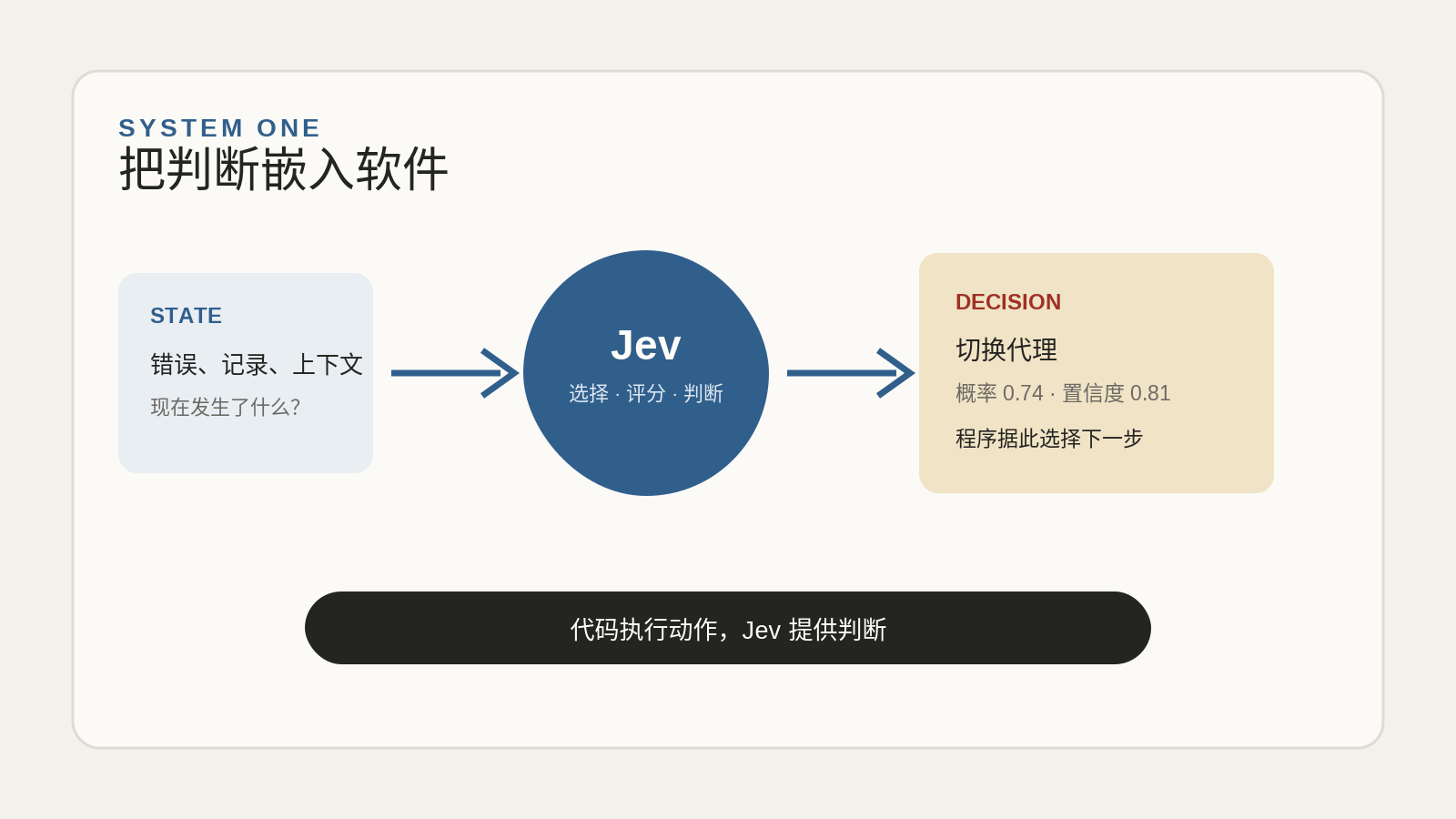
The Jev is the first “System One” model from TypeSafe AI. It receives a state and a well-defined question, and returns a choice, rating, or decision, rather than generating a long piece of text for humans to read. The output comes with probability and confidence, suitable for direct program branching, sorting and routing.
This makes its division of labor different from that of ordinary large language models: large models are more suitable for writing articles, explaining reasons, and completing open-ended tasks, while Jev is more like a fast, structured judgment node inside the software. It won't perform the actions for us, the actions are still the responsibility of the project code.
02
Write down people’s expectations first
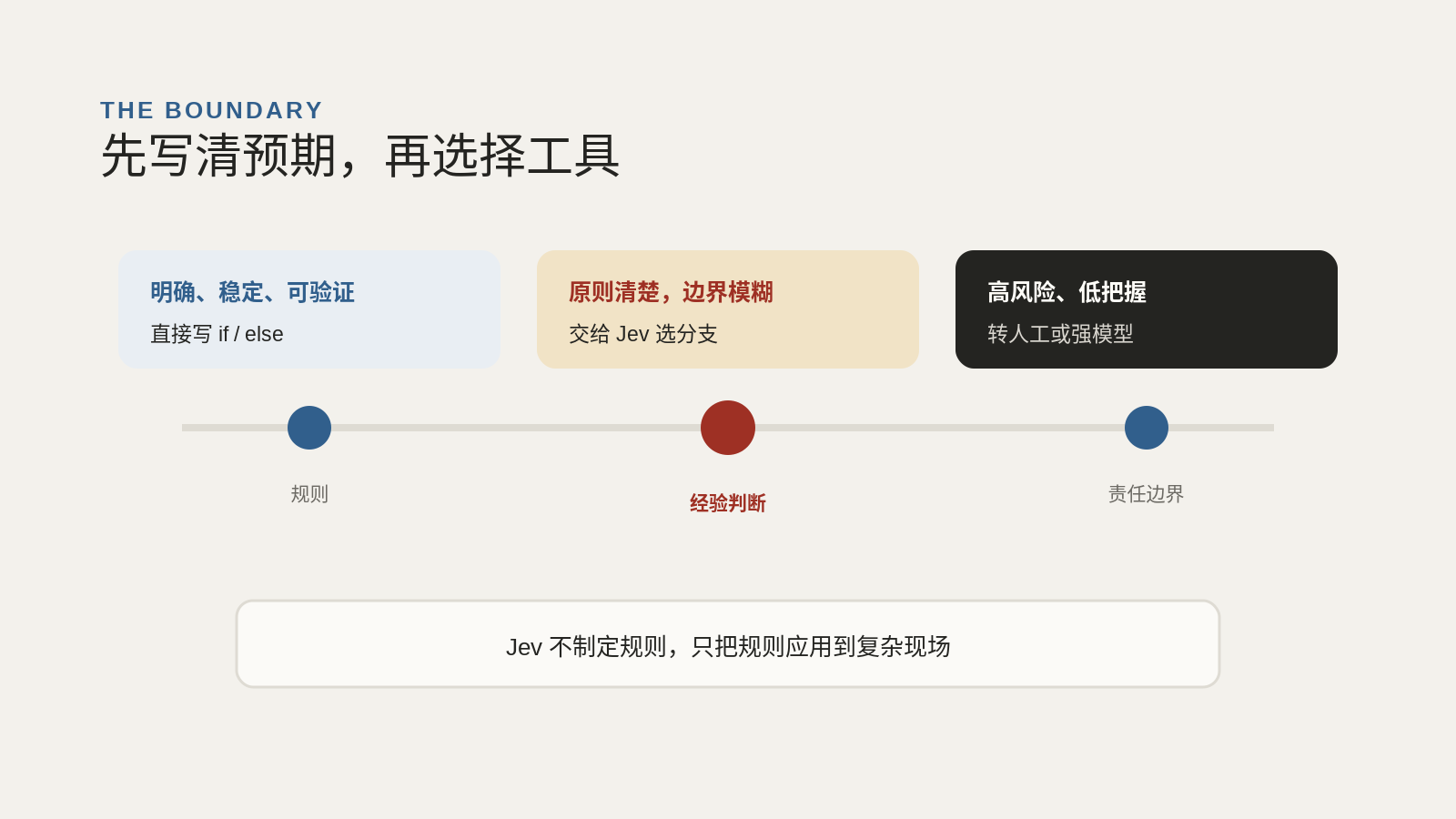
The first step in using Jev is not to call the model, but to ask: If it is handled by an experienced person, what information will he consider, what actions can be taken, and under what circumstances must he stop and ask others to review? These are the business rules and answer scope.
If the rule is completely certain, such as "switch the proxy if HTTP 403 appears twice", it is more reliable to write the program conditions directly. The value of Jev is that: Principles can be stated clearly, but the real state consists of multiple incomplete, ambiguous, or conflicting signals that are difficult to enumerate into a long list of conditions.
03
Use y2mp3 to see and judge
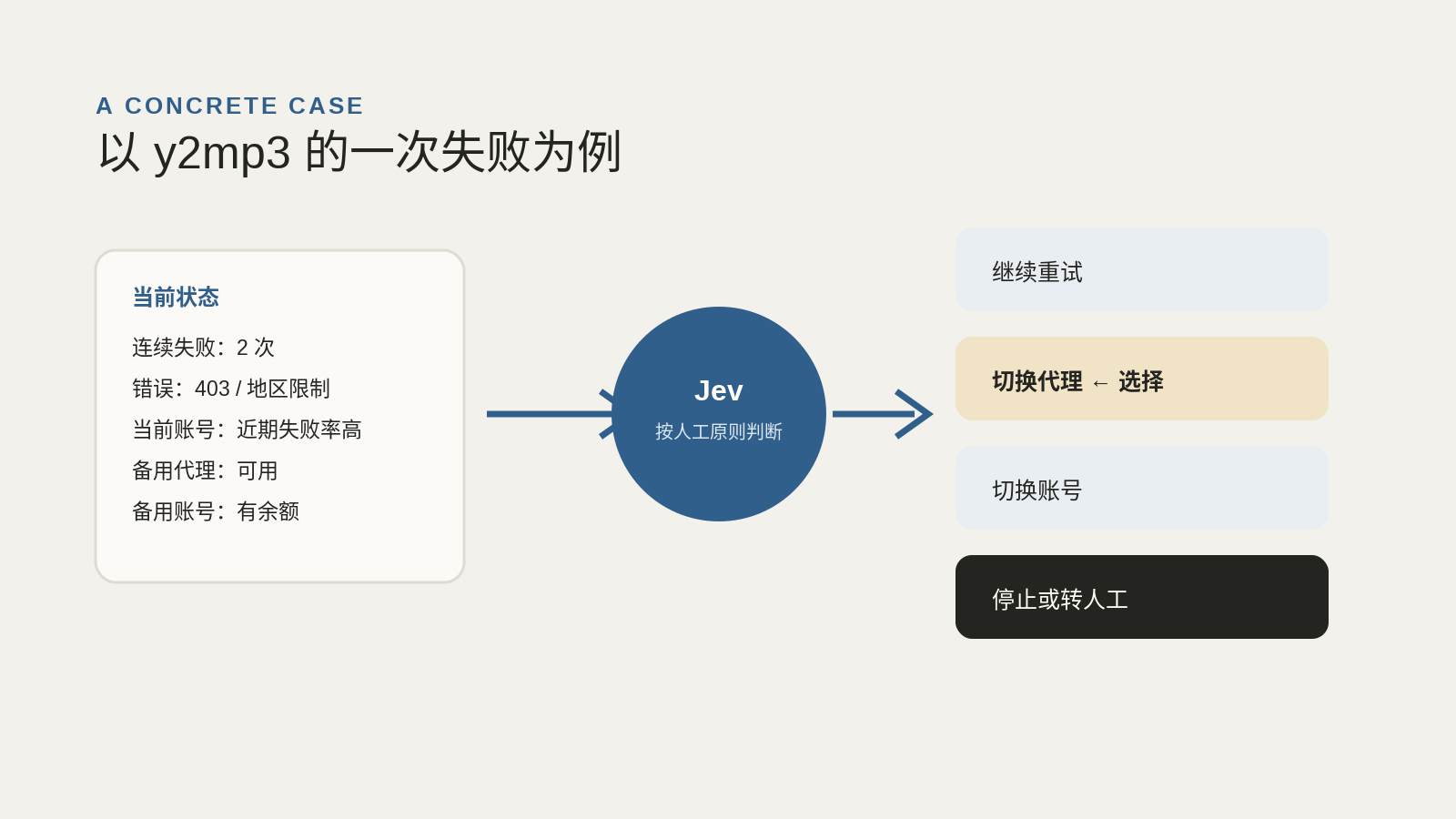
Assume that y2mp3's manual processing principles are: you can retry for occasional failures; you can change agents or accounts when there are continuous failures and the resources are normal; don't continue to hit the wall when it looks like regional restrictions or verification codes; switch to manual when you can't judge.
The current task has failed twice, and the error message varies between 403 and regional restrictions. The current account has a higher failure rate recently, but both the backup agent and the backup account are available. The program handed this on-site information to Jev and asked it to choose from "continue to try again, switch agents, switch accounts, stop tasks, and switch to manual work". Jev is only responsible for branch selection, and the actual switching and stopping are still performed by y2mp3.
04
Embed judgment into projects
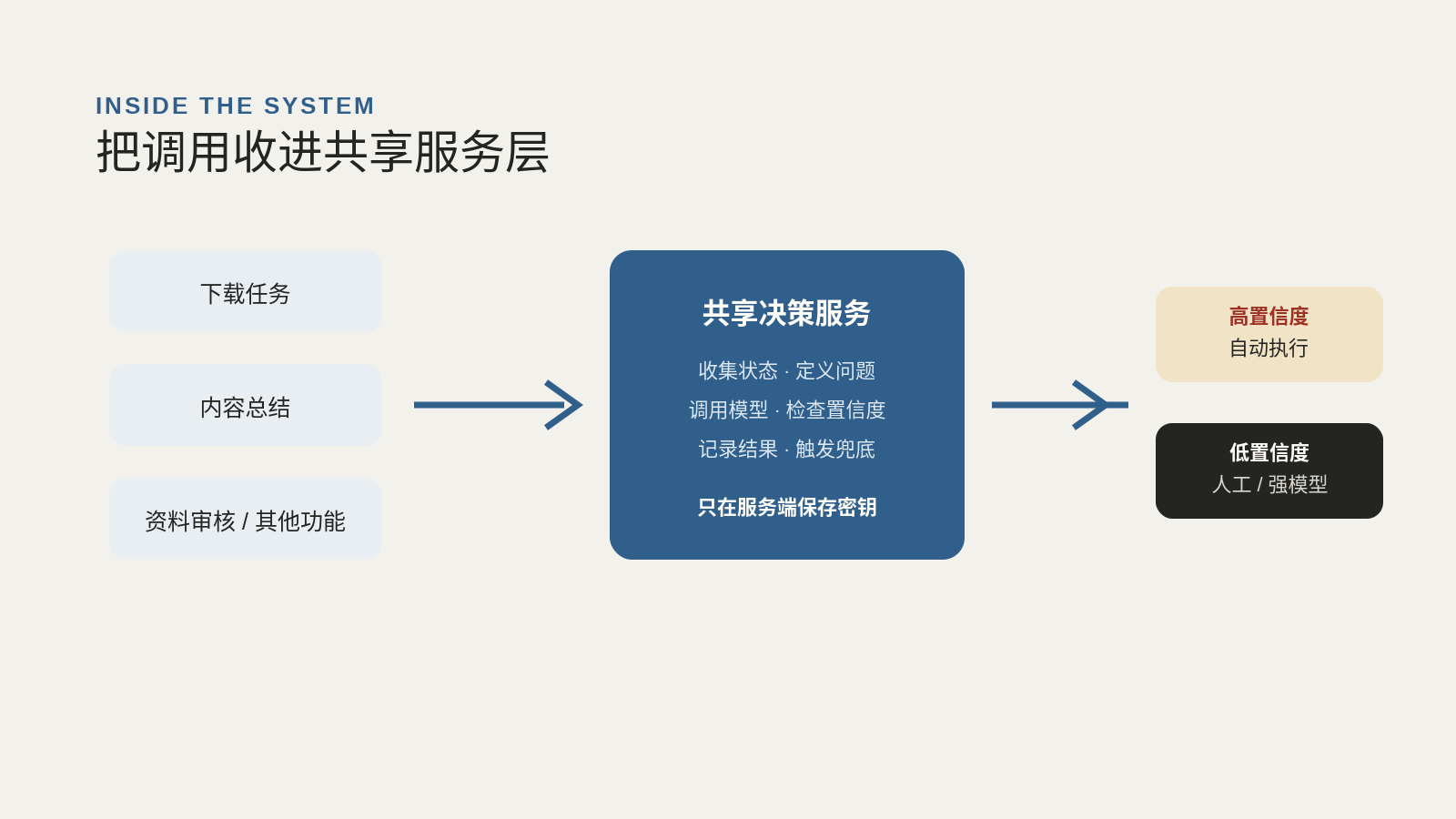
In actual projects, it is more appropriate to build a server-side shared module instead of scattering API calls in each page. Download tasks, content summary, data review and other functions only describe their own status and problems. The sharing module is uniformly responsible for keys, timeouts, confidence, logs and disclosure policies.
For example, the business code only needs to express "determine the next action of the download task" or "determine whether the subtitles are enough to enter the summary". After returning the result, it will be automatically executed according to the threshold, handed over to a stronger model, or transferred manually. The API Key must remain on the server side and cannot be called directly from the browser.
05
Official hosting or self-deployment?
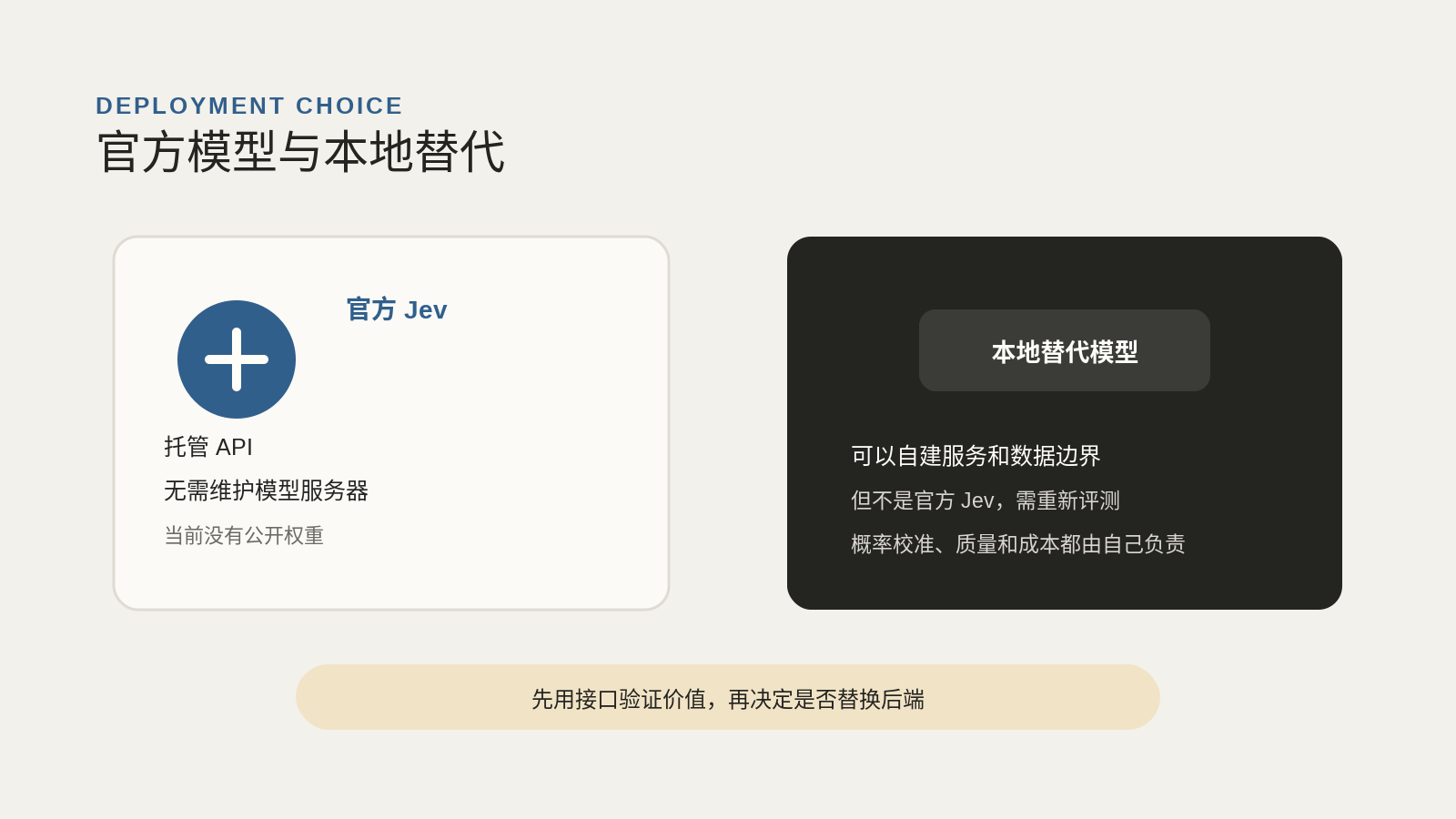
The currently public official usage method is managed API: we obtain the API Key and call Jev from the server. The official model weights, local inference images or self-deployment versions of Jev are not disclosed, so installing the SDK does not mean downloading the model to your own server.
Local alternative models may emerge from the community with the same options, ratings, and interfaces, but they are not official Jev, and quality, probability calibration, and cost all need to be re-evaluated. A safer engineering method is to encapsulate the call in the internal interface first, and then replace the backend later.
06
Test first, then automate
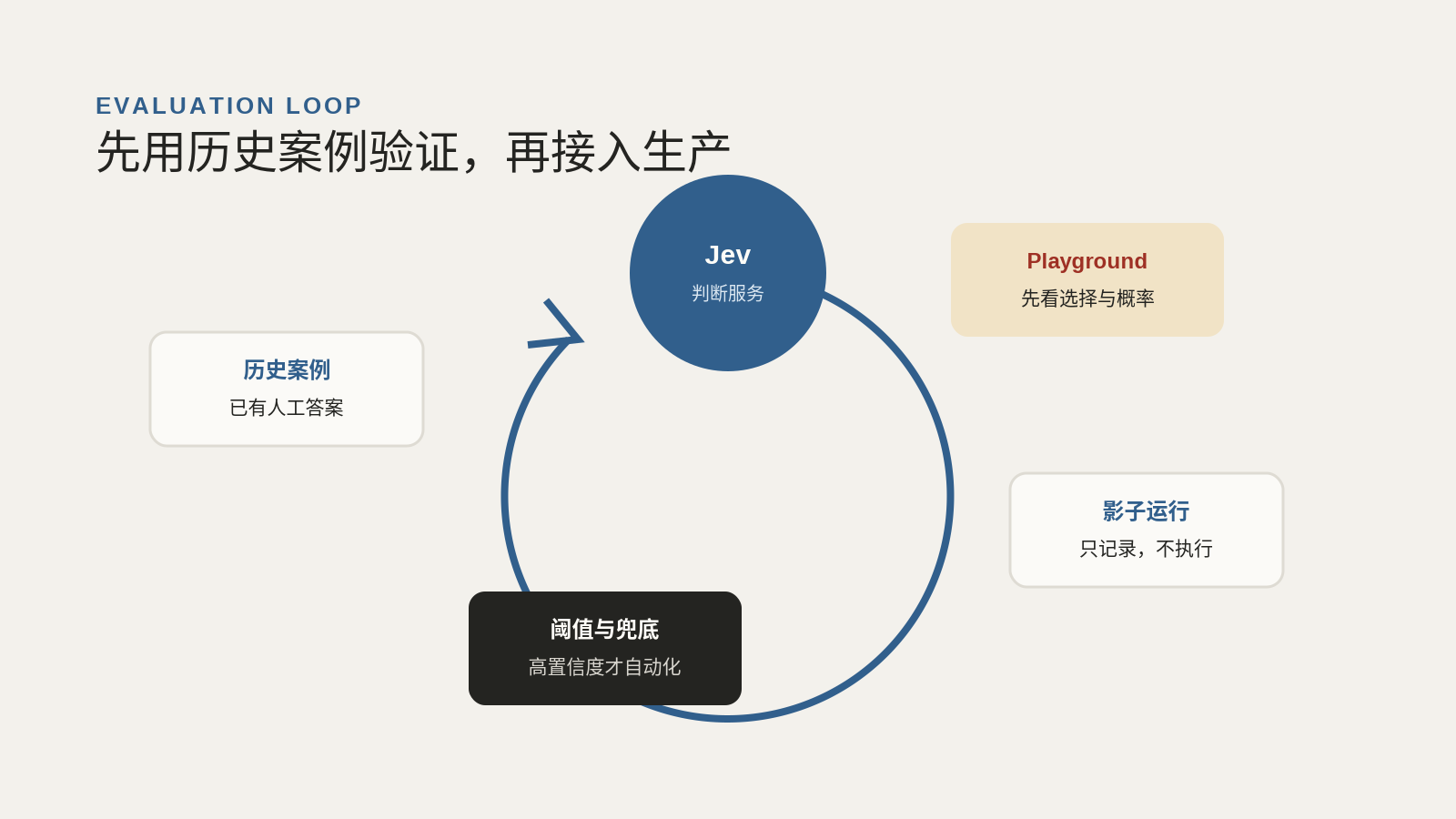
Testing Jev should not just ask "did it get it right this time?" A more valuable approach is to collect a batch of historical cases that have been processed by someone, use manual selection as a reference answer, and then observe whether Jev stably selects the same branch, and whether low confidence really corresponds to difficult cases.
When connecting to production, you can do a shadow run first: Jev only records suggestions and does not change the real process. Once we know in which scenarios it is reliable, we can then set automation thresholds and reserve manual or strong model coverage for low-confidence results. In this way, the model is a replaceable component of the system rather than an unexplainable master control center.
One sentence summary
Jev does not formulate business rules for us, but turns the judgment that "people can explain clearly, but it is difficult to write a complete program" into a selection node that can be embedded in code.