

When many people are making products, they will understand "completion" as "how many functions there are, the page is beautiful enough, and the system is complex enough." But what really determines whether a product can make money is that users are willing to pay for a clear result, and you can deliver this result stably.
This means that product completion not only includes functionality, but also stability, capacity, and cost. Let’s break this matter down using a path from “idea” to “charge”.
01
The starting point for making money is when users get results


A product does not need to complete all functions before it is eligible for charging. A more practical approach is to first find the shortest value chain: users come in with questions, complete one or two key actions, get an important enough result, and then be willing to pay for this result.
If users can only feel "there are many functions here" but cannot tell what they get, the product will still be in the display stage. The first condition for charging is for the user to be able to say in one sentence what the product has done for him.
02
Before charging, go through at least one main process
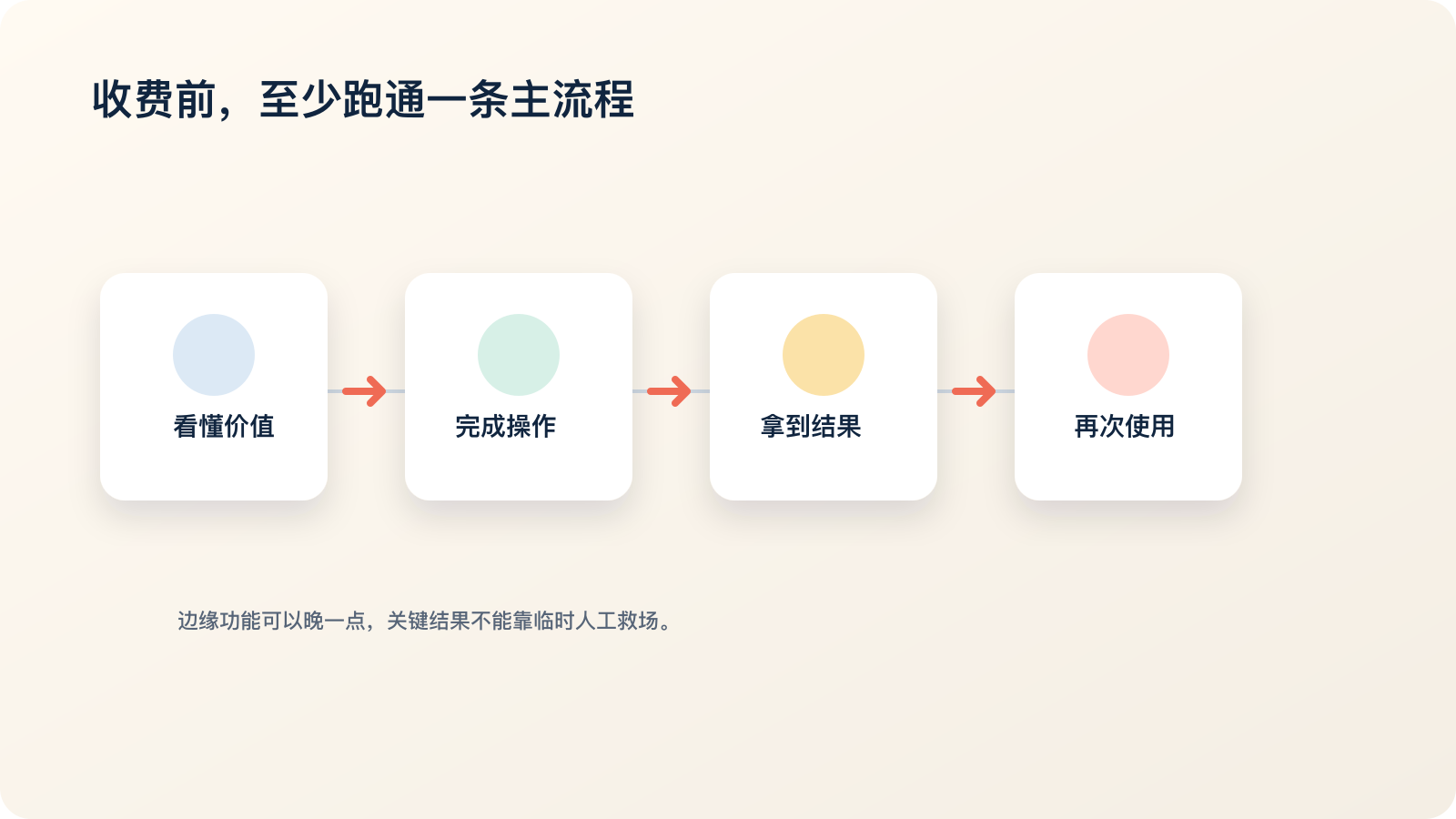
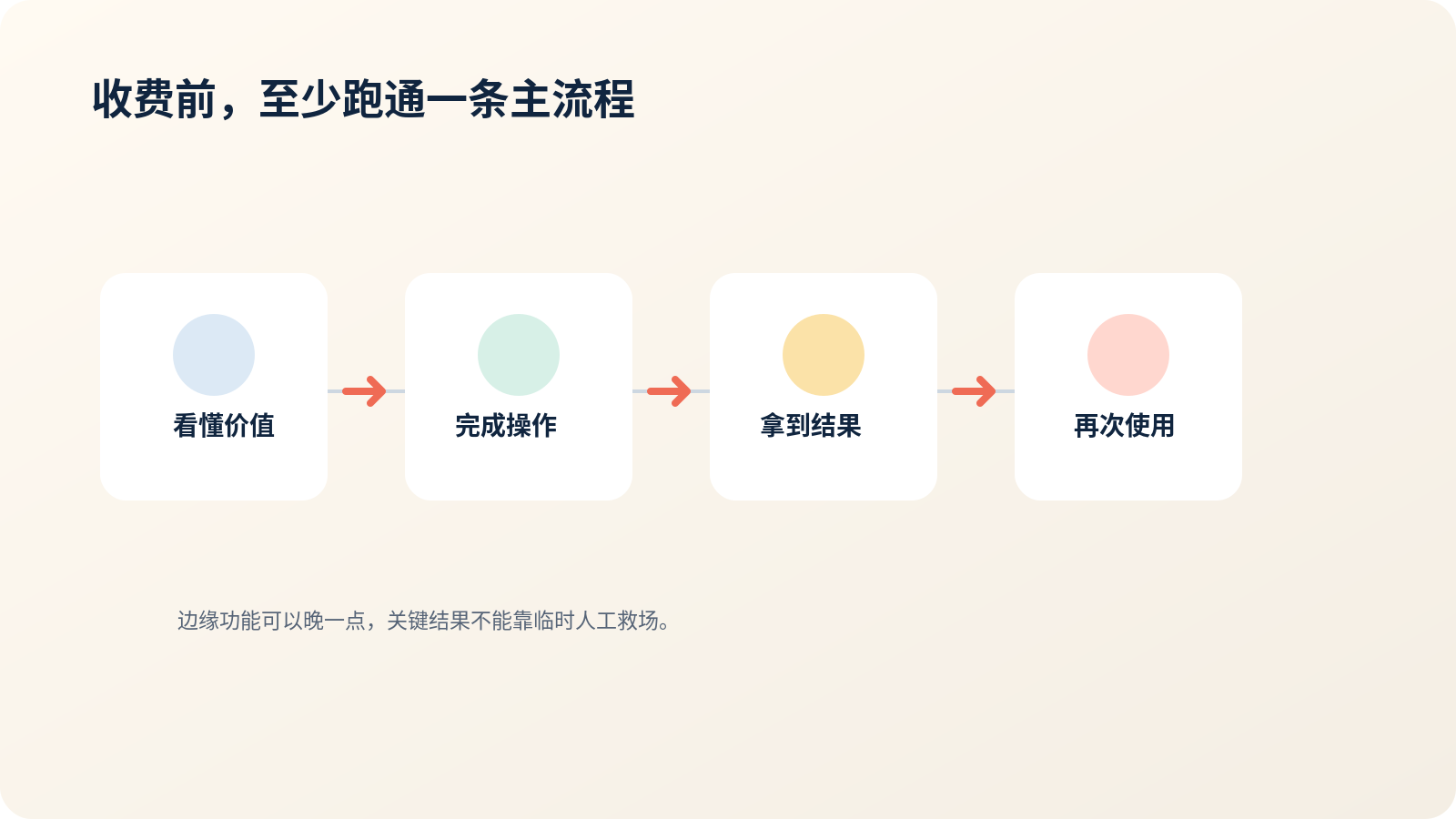
A chargeable main process must go through at least four steps: the user understands the value, completes the operation, gets the result, and is willing to use it again. There can be manual assistance in the middle, or there can be no complete automation for the time being, but this path must be real and can be delivered repeatedly.
Marginal functions can be done later, but key results cannot be saved temporarily. It's more important for users to successfully complete the core task the first time than how many options there are on the settings page.
03
After users pay, the product must look like a reliable service


After charging, users expect services, not prototypes. The product does not have to be error-free, but at least a few bottom lines must be maintained: the success rate of key processes is high enough, the response time will not make people lose patience, data will not be easily lost, and the cause of problems can be found and restored.
Therefore, before charging, you need to prepare not only the function list, but also error prompts, retry mechanisms, logs, customer service portals and basic data protection. Reliability is not a decoration added after launch, but an integral part of product delivery.
04
Capacity planning should follow user growth


Capacity planning does not mean preparing servers for hundreds of thousands of users from the beginning. Doing this in the early stage is very costly and may not solve the real bottleneck. A more reasonable approach is to plan in stages: first clarify how many users and concurrency the current version supports, and then write down the trigger indicators, expansion actions and new costs of the next stage.
For example, the current version can stably host 1,000 registered users and 100 concurrent tasks; when concurrent tasks continue to exceed 80%, add workers, adjust the queue, or upgrade the database. Each level must know its own capacity boundary and how to take the next step after crossing the boundary.
05
When traffic suddenly increases, protect core results first
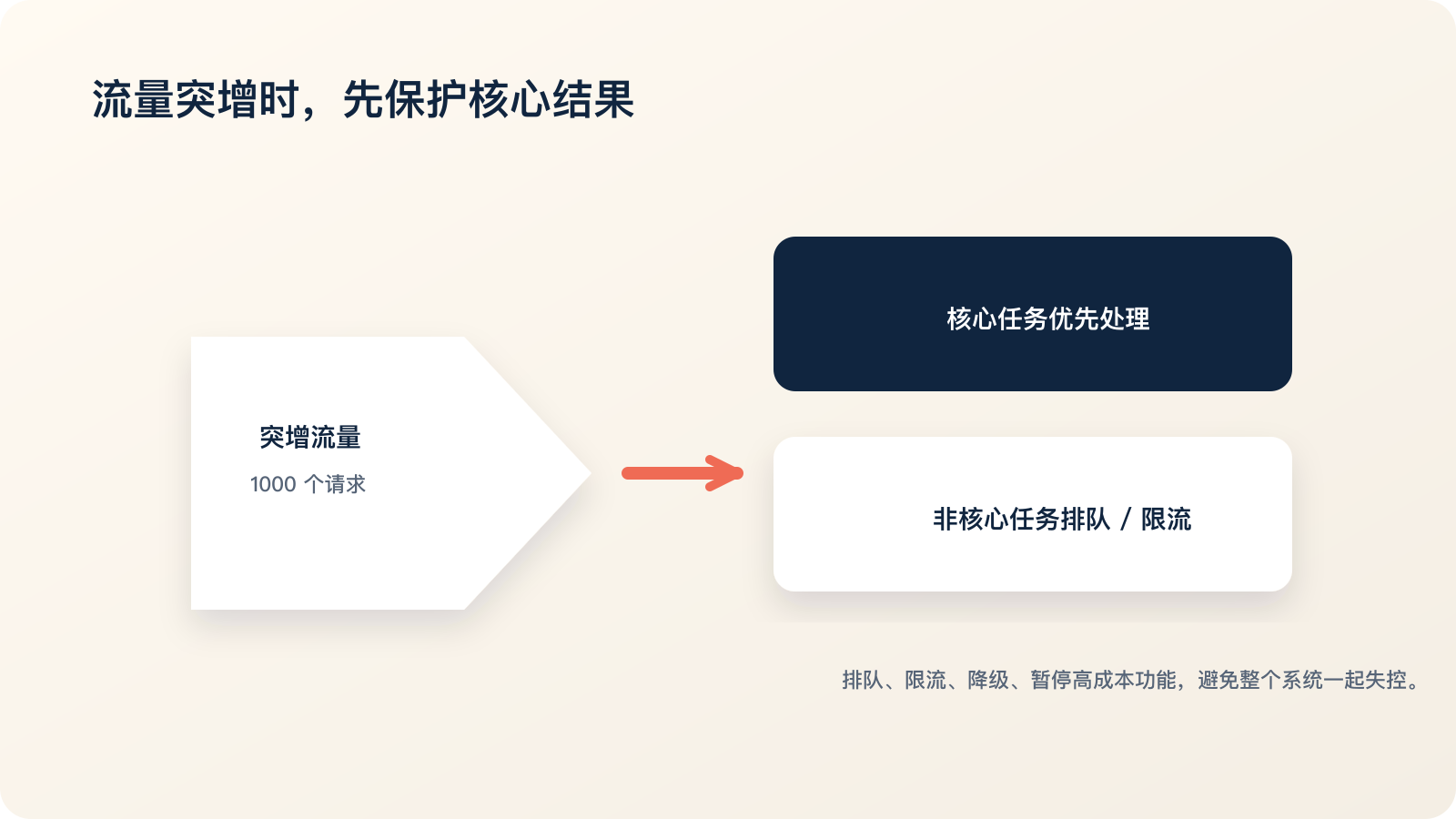
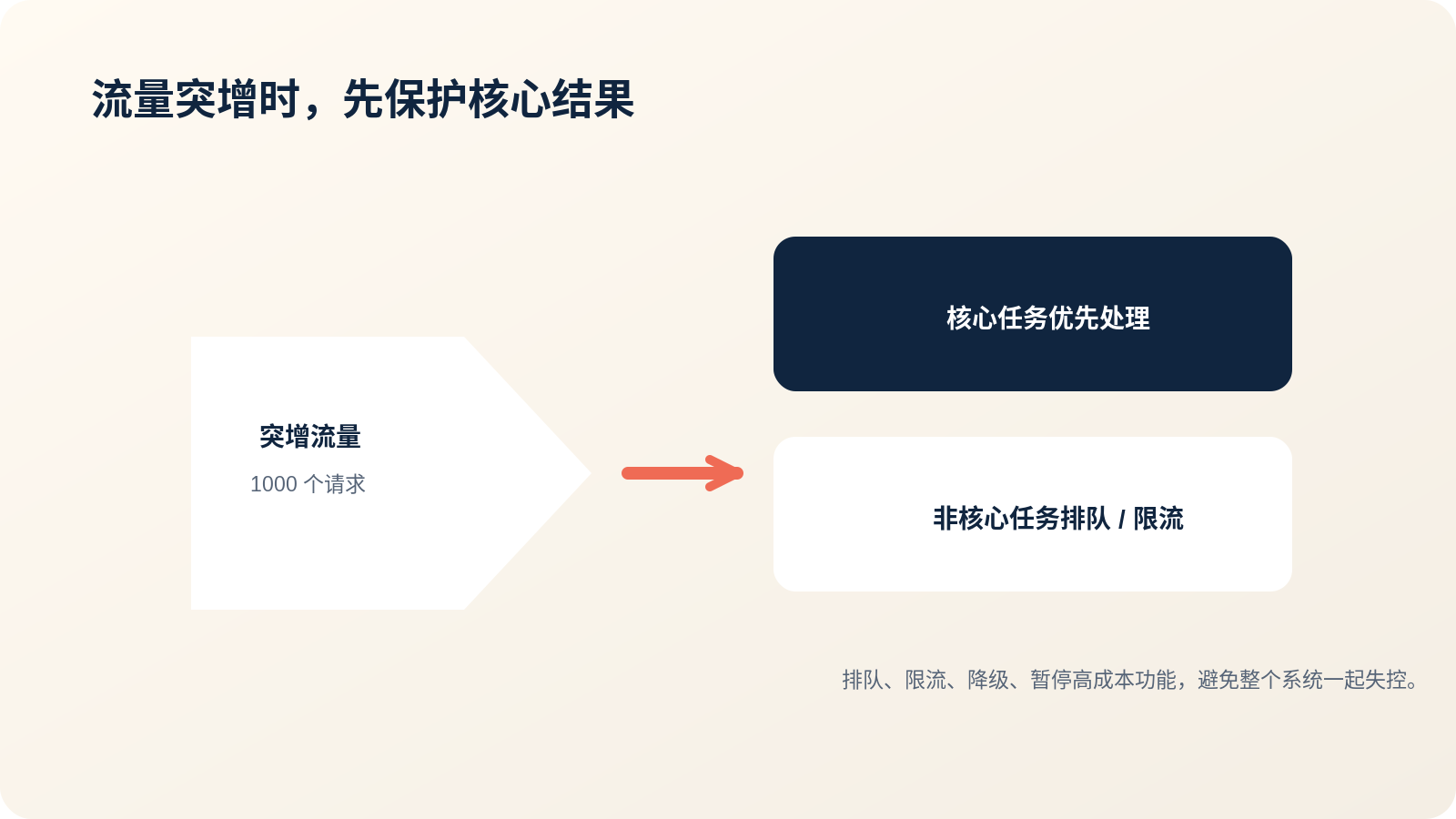
“No matter how many people come, it won’t collapse” is not a realistic capacity goal. A more practical goal is: to operate stably within a predetermined range, and to be able to limit, queue, degrade or expand when the range is exceeded, instead of the entire system going out of control.
You can protect core tasks first, put non-core tasks into the queue, temporarily reduce picture quality, turn off high-cost functions, or give users a clear waiting prompt. It’s not scary if the system has boundaries. What’s dangerous is that there is no way to deal with it when the boundaries are exceeded.
06
Product completion is three doors
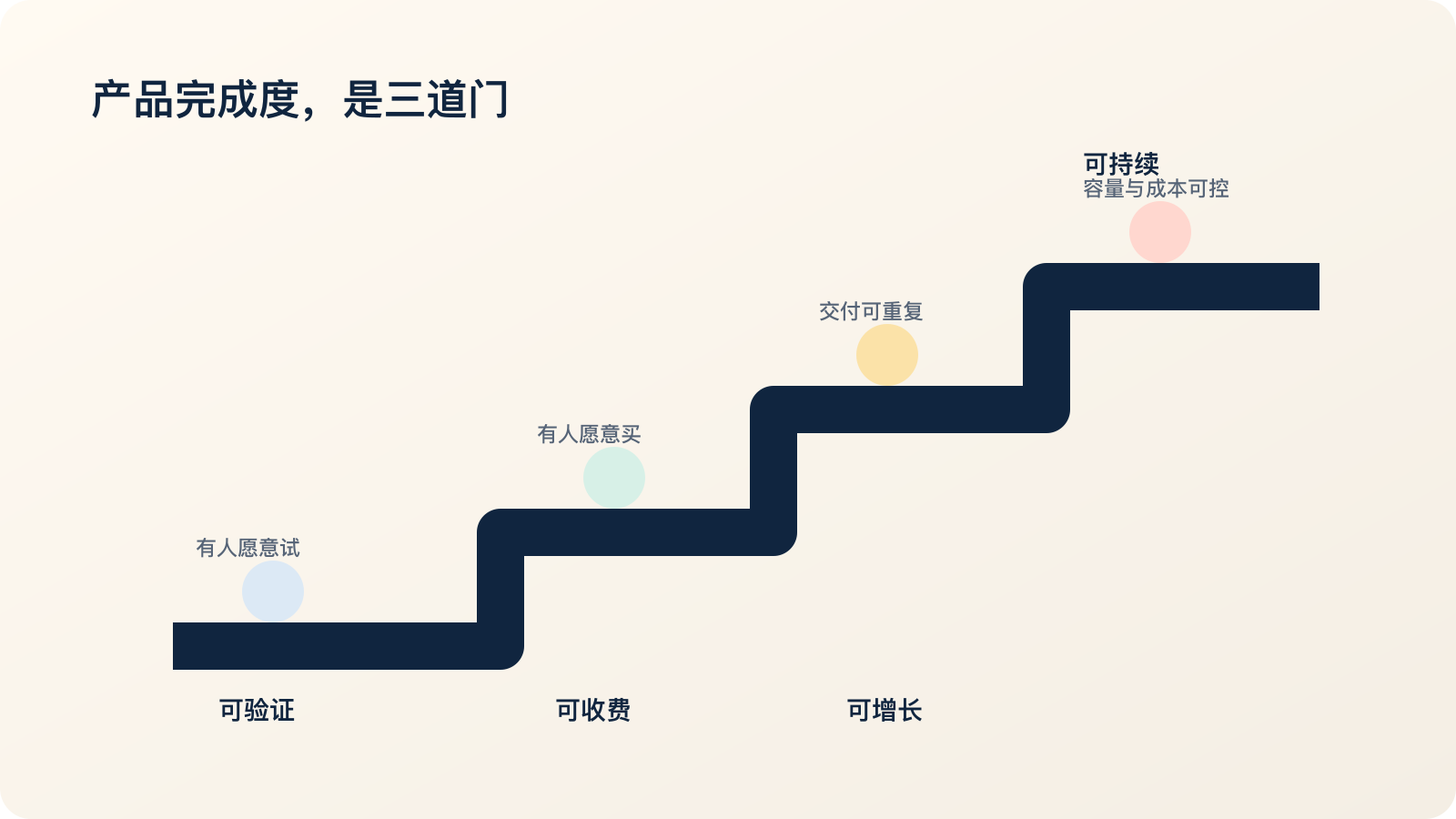
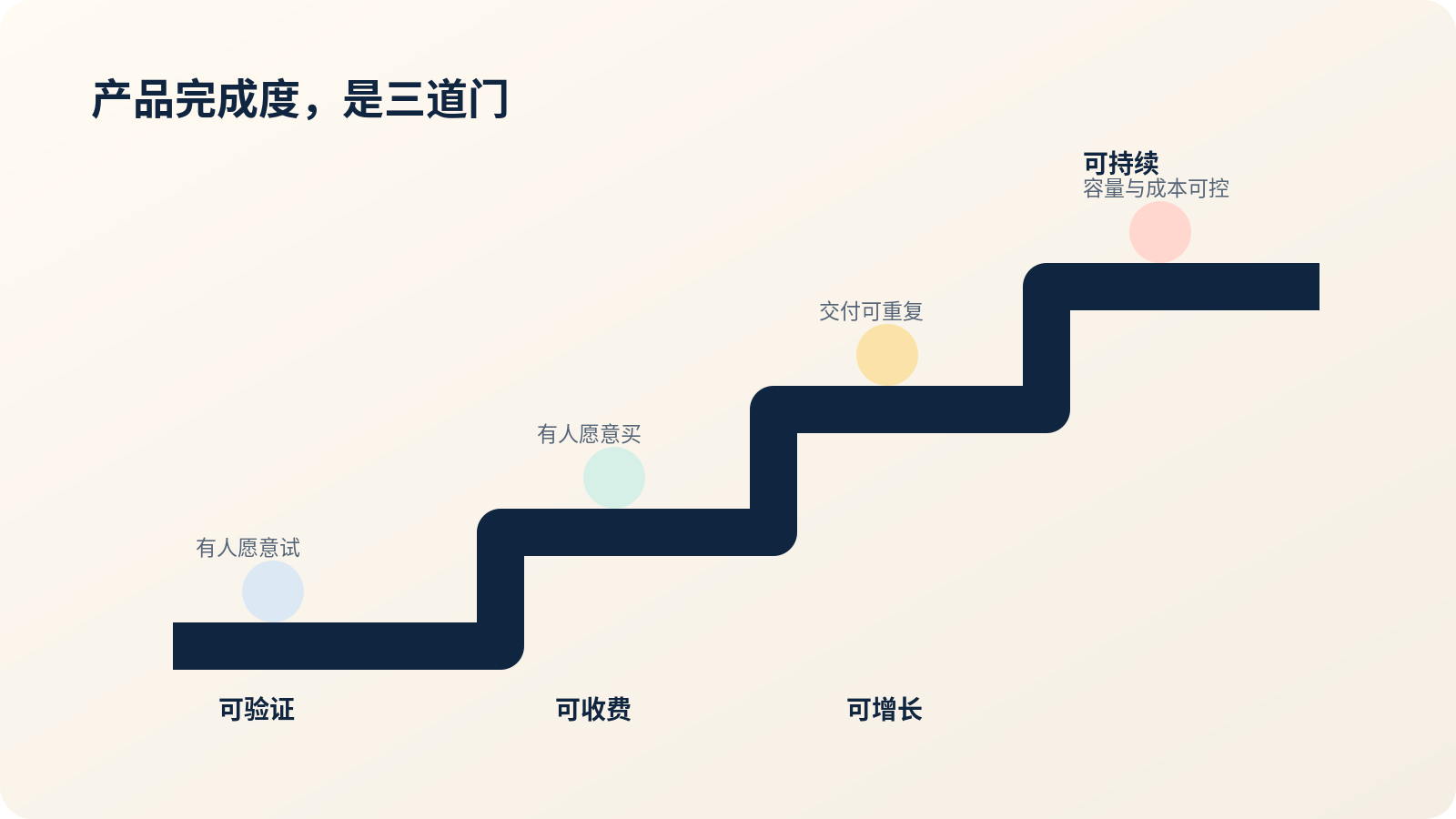
The first door is "verifiable": someone is willing to try and can prove that the problem really exists. The second door is "chargeable": someone is willing to buy it, and the core results can be delivered stably. The third door is "growable": the delivery process can be repeated, and customer acquisition, capacity and costs can be managed as users grow.
Therefore, the moment when a product is truly suitable to start making money is usually not when it looks the most complete, but when it already meets these four conditions:The value is clear, the core process is running smoothly, the delivery is stable enough, and the capacity is planned in stages.
Let a small group of users be willing to pay first, and then expand and improve it based on actual usage. This is usually closer to commercialization than making the product "everything available" behind closed doors.
One sentence summary
A profitable product is not one that fulfills all functions, but one that continuously delivers results that users are willing to pay for within clear capacity boundaries.